Cocoa Powder Manufacturing Process: A Complete Guide
Cocoa powder is one of the most widely used ingredients in the global food and beverage industry, found in everything from artisan chocolate bars and premium bakery products to instant beverages, dairy formulations, and even cosmetics. But how exactly is cocoa powder made? And what separates a premium-grade product from a standard one?
ARTICLE
6/3/20266 min read
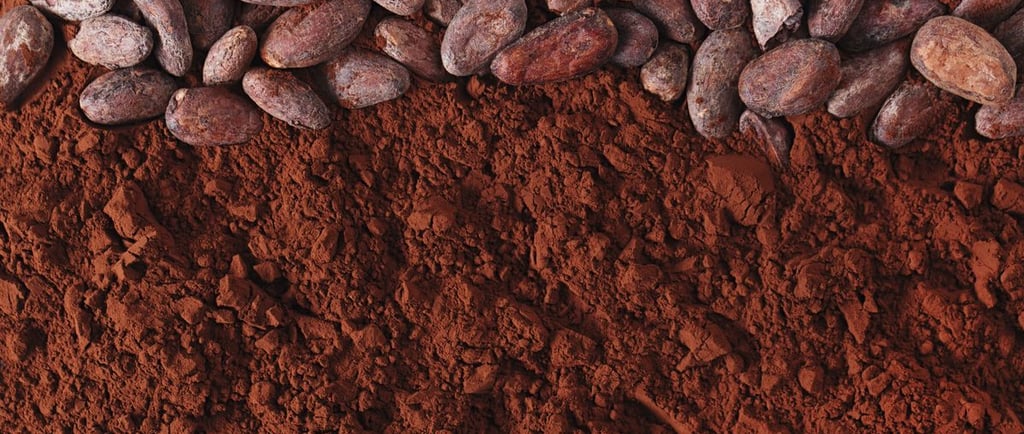
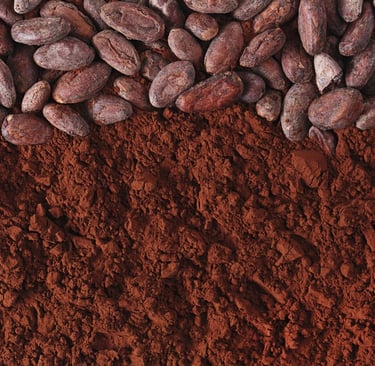
Cocoa powder is made from cocoa liquor (also called cocoa mass), which is a smooth paste made by grinding up fermented and roasted cocoa beans. Cocoa liquor naturally contains about 50-56 % cocoa butter. Much of the cocoa butter is extracted by pressing, leaving a solid material known as press cake. The press cake is then ground into the fine powder used in food production.
There are two main types of cocoa powder on the market: natural cocoa powder and Dutch-process cocoa powder (also called alkalized cocoa powder). Natural cocoa powder – has the original acidity with a pH from 5.0 to 5.8. It’s got a more lively flavor, with some fruity notes, and it’s a lighter brown color. Alkalized cocoa powder undergoes further processing to increase its pH to between 6.8 and 8.2. The end result is a darker color and a finer flavor and improved dispersibility in liquid applications, which makes it particularly popular for use in the manufacture of beverages, dairy products and confectionery.
The quality of cocoa powder starts with the choice of raw cocoa beans. Premium cocoa powder is usually made from well-fermented beans that have been fermented for about five to seven days. After fermentation, the beans are carefully dried to the ideal moisture level for processing. Indonesian cocoa beans, especially those from Sulawesi and Sumatra, are known for their unique flavor profile and are in high demand in international markets.
The first step in the production process is to clean and sort the cocoa beans. This stage includes the removal of impurities like stones, metal fragments, sticks, broken shells and defective beans by special equipment. This step is critical to product safety and to protect downstream processing equipment.
Then the beans are cleaned and roasted under carefully controlled conditions. Roasting temperatures generally range from 110°C to 150°C depending on the flavor profile desired and the equipment used. Roasting is important for flavor development via the Maillard reaction and also reduces moisture content, kills potential pathogens and loosens the shell for easier removal.
After the roasting process is finished, the beans are winnowed. In the roasting process,the beans are cracked and an air separation system separates the outer shell from the cocoa nibs. The valuable cocoa solids and cocoa butter components that will be processed further . Shells are often reused for biomass fuel, compost, or other industrial uses.
Then the nibs are ground up into cocoa liquor or cocoa mass. The nibs are ground to release the natural cocoa butter and create a smooth flowing paste. High quality grinding systems reach very fine particle size, which helps to improve pressing efficiency and quality of the final product.
For manufacturers of Dutch-process cocoa powder, alkalization is added before or after grinding. The pH of the cocoa material is adjusted with alkalizing agents, such as potassium carbonate (food grade). This process affects the final color, flavor and solubility properties of the powder. Alkalization can result in anything from medium brown cocoa powder to very dark cocoa powder varieties, depending on the target specification.
Then comes the pressing hydraulically . The cocoa liquor is pressed under high pressure to extract the cocoa butter from the mass. The separated cocoa butter is collected separately and can be used for chocolate production, cosmetics and other applications. What is left is solid material called press cake . This is the basis for cocoa powder . The residual fat content in the press cake determines whether the end product will be classified as a low-fat, standard-fat or high-fat cocoa powder.
The press cake is then cooled and stabilized after pressing. This freezing process prevents migration of fat and helps maintain flavor quality and produces a brittle structure that is amenable to milling. The press cake is then finely milled in special milling equipment to obtain the cocoa powder with a controlled particle size distribution after stabilization.
Most manufacturers will have a sterilization or pasteurization step to ensure food safety. This process eliminates the risk of microbiological contamination and enables manufacturers to meet international food safety standards. Effective sterilization is especially important for export-oriented production facilities for global food manufacturers.
The cocoa powder is screened and classified after sterilization to obtain a uniform particle size. Uniform particle size is important because it affects product performance in bakery applications, beverage formulations, confectionery products and dairy systems. At this point, consistency means predictable results to end users.
The powder is then blended and standardized. You can mix different production lots to achieve uniform specification for fat, pH, color and flavor. This step is critical for suppliers serving international markets where buyers demand consistent quality from shipment to shipment.
The final step is packing up. Cocoa powder is normally shipped in multiwall kraft paper bags with protective liners. Typical export pack sizes are 25kg & 50kg bags, but bulk is also available. The packaged product undergoes quality control checks including metal detection and weight verification before shipment to ensure it meets customer requirements and food safety standards.
The quality control is still an important part in the whole process of manufacturing. Some of the key parameters monitored are: pH, fat content, moisture content, particle size, microbiological safety and heavy metal levels. Good manufacturers will have a Certificate of Analysis (COA) for each batch so a buyer can check that the product is within the required specifications.
Food safety certifications are important too in today’s global market. Buyers often demand suppliers to have internationally recognized certifications such as ISO, HACCP, GMP and Halal. These certifications demonstrate our dedication to quality management, food safety, manufacturing hygiene, and adherence to market-specific requirements.
Sustainability has also emerged as an important consideration in the cocoa industry. Responsible manufacturers are looking to cut down on waste by using cocoa shells for biomass fuel or value-added ingredients. Energy-efficient processing systems, responsible water management practices and sustainable sourcing programs all contribute to a more environmentally responsible cocoa supply chain.
Knowledge of the process of manufacture of cocoa powder gives useful information about factors affecting the quality, flavor, color and safety of the product. From bean selection and roasting to pressing, milling, sterilization, and packaging, every stage contributes to the final product. For buyers seeking reliable cocoa powder suppliers, evaluating production capabilities, quality control systems, certifications, and sustainability practices can help ensure consistent and high-quality supply for long-term business success.
Frequently Asked Questions
Q: What is the main manufacturing difference between natural and alkalized cocoa powder?
A: Both types go through the same basic production steps; the main difference is that alkalized (Dutch-process) cocoa has an extra alkalization step, which is applied at the nib, liquor, or press cake level. This process increases pH from the natural range of 5.0-5.8 to 6.8-8.2, resulting in a darker color, smoother flavor, and better dispersibility in water-based applications.
Q: The final fat percentage of cocoa powder is determined by which step in the manufacturing process?
A: The fat content is determined by the hydraulic or expeller pressing stage. The manufacturers have some control over the amount of residual cocoa butter in the press cake, and thus in the finished powder, by varying the pressure in the press and the processing conditions. The standard grade usually has 10-12% fat, while the high-fat versions have 20-24%.
Q: Does alkalizing change the nutritional profile of cocoa powder?
A. Alkalization may cause a slight loss in some polyphenols and antioxidant activity compared to natural cocoa powder. But it does greatly improve color, solubility, and flavor profile for many food applications. With natural vs. alkalized cocoa, the decision should be based on your specific product formulation needs, not just the nutritional factors.
Q: How should cocoa powder be stored to maintain quality?
A: Cocoa powder should be stored in cool (below 25°C), dry (relative humidity below 65%), and odor-free conditions, away from direct sunlight and strong-smelling materials. Keep bags sealed at all times. Nitrogen flushing of packaging headspace extends shelf life by reducing oxidation. Proper storage prevents clumping, flavor degradation, and microbial growth.
Q: What certifications should I look for when choosing a cocoa powder supplier?
A: Look for certifications such as ISO, HACCP, and GMP at the very minimum, which cover quality management, control of food safety hazards, and manufacturing hygiene, respectively. For buyers in Muslim-majority markets or those with diverse customer bases, Halal certification is also essential. Always request the actual certificate documents, not just a website claim, and verify that they are current and issued by a recognized certifying body.
Want to learn how cocoa powder is used in real-world applications? Read our article "The Role of Cocoa Powder in the Food and Beverage Industry" and discover how cocoa powder contributes to flavor, color, and functionality in various products.


Cocoa Prime
Committed to bring the finest
Indonesian Cocoa to the world
Copyright © 2026 Cocoa Prime
Contact us:
Jl. Letnan Sutopo, Serpong, Tangerang
PHONE: +62-881-0104-79948