Indonesian Cocoa: The Tropical Gold of the Archipelago – From Smallholder Farmers to Global Premium Markets
A comprehensive overview of Indonesian cocoa: production statistics (617,000 tonnes in 2024), growing regions (Sulawesi 65%), cocoa varieties (Forastero, Criollo, Trinitario), government rejuvenation targets, and export markets. Perfect for industry professionals, chocolate enthusiasts, and researchers.
ARTICLE
Indonesian Cocoa: The Tropical Gold of the Archipelago
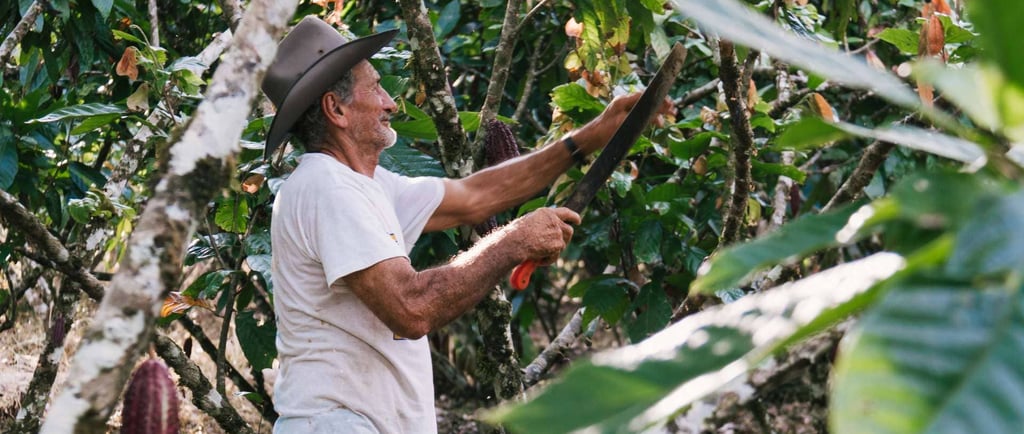
Indonesian cocoa stands as one of the country's most strategically important agricultural commodities, woven deeply into the fabric of rural livelihoods and the national export economy. The cacao tree (Theobroma cacao), introduced to the Indonesian archipelago by Spanish traders centuries ago, found a second home in the country's fertile soils and equatorial climate conditions so favorable that Indonesia rose to become one of the world's foremost producers of cocoa beans. Today, the Indonesian cocoa industry supports millions of smallholder farmers across multiple islands, serving as a vital source of income and a significant contributor to the nation's foreign exchange earnings. The sector is overwhelmingly driven by small-scale farming. According to BPS-Statistics Indonesia, the vast majority nearly 99.88 percent of the country's cocoa output comes from independent smallholder farmers, with private and state-owned plantations contributing only a marginal share. This smallholder-dominated structure reflects both the democratic spread of cocoa farming across Indonesian communities and the structural challenges the industry faces in terms of productivity, quality control, and technology adoption. Indonesia has long held a prominent position in global cocoa production, recognized as one of the top three cocoa-producing nations in the world for the 2024/2025 season. At its peak, production reached over 767,000 tonnes in 2018, and even with recent declines, the country earned USD 2.65 billion from cocoa in 2024. The smallholder farmer remains the true backbone of this tropical gold industry, determining its resilience and future trajectory.
Few countries on earth are as naturally suited to cocoa cultivation as Indonesia. Straddling the equator across a vast archipelago of over 17,000 islands, Indonesia sits squarely within the "Cocoa Belt" the tropical band between 10 degrees north and 10 degrees south of the equator where cacao trees thrive best. The country's tropical climate delivers warm temperatures year-round, typically between 25°C and 32°C, along with high humidity and substantial rainfall. Many of the key growing regions in Sulawesi receive between 1,500 and 2,500 millimeters of rainfall annually, allowing for multiple harvests each year. The volcanic soils across much of Sulawesi, parts of Sumatra, and other cocoa-growing islands are rich in minerals and organic matter, creating an exceptionally fertile growing medium. Sulawesi is the undisputed heart of Indonesian cocoa production, accounting for approximately 65 percent of the country's total output, with provinces like South Sulawesi, Central Sulawesi, and Southeast Sulawesi as dominant hubs. This geographic spread across a vast tropical archipelago not only provides resilience to the supply chain but also creates extraordinary diversity in flavor profiles a quality increasingly valued as single-origin cocoa in the global premium chocolate market, where traceability and terroir command higher prices.
Theobroma cacao Varieties and Indonesia's Genetic Advantage
Indonesian cocoa cultivation spans all three of the world's primary commercial cacao varieties, giving the country a remarkably broad genetic base compared to many other producing nations. Forastero is by far the most widely cultivated variety in Indonesia, comprising around 90 percent of world cocoa production. Known locally as cacao lindak or cacao curah (bulk cocoa), Forastero is prized for its hardiness, disease resistance, and relatively high yields. Its beans are robust, slightly bitter, and well-suited to industrial chocolate production, predominantly grown across Sulawesi. Criollo, in contrast, is the rarest and most prized variety in the world known as "fine flavour" cocoa with low bitterness, delicate floral aroma, and complex profile. While it yields less and is more susceptible to disease, its exceptional quality commands premium prices, cultivated primarily in East Java and Central Java. Trinitario, a natural hybrid of Forastero and Criollo, combines robustness with refined, nuanced flavor, producing beans with fruity, floral, and spicy undertones. Genetic research has confirmed that Sulawesi's farmer-selected cocoa clones are predominantly hybrids derived from Trinitario and Upper Amazon Forastero groups. Indonesia's unique position of producing all three varieties positions it favorably in both the bulk commodity market and the rapidly expanding fine-flavour chocolate segment, where Theobroma cacao biodiversity is increasingly celebrated by craft chocolate makers worldwide.
The future of Indonesian cocoa is a story of significant opportunity set against formidable structural challenges. On the demand side, the outlook is exceptionally promising. Global cocoa prices reached their highest levels in decades in 2024, driven by declining output from West Africa, and the global cocoa market is projected to reach USD 26.7 billion by the mid-2030s. Indonesia's cocoa sector also benefits from a rising global appetite for sustainable, ethically sourced, and single-origin cocoa precisely the attributes that Indonesian cocoa can credibly offer. The country's growing fine-flavour cocoa segment has been gaining international recognition, with Indonesian producers achieving gold awards in international competitions such as the Cacao of Excellence contest, signaling world-class quality potential. The Indonesian government has recognized the urgency of revitalizing the sector, with President Prabowo Subianto publicly calling for accelerated replanting and farm rejuvenation in 2025, and the Ministry of Agriculture targeting rehabilitation of 175,000 hectares of cacao farmland in 2026. Challenges include declining production since 2018, ageing tree stock, Vascular Streak Dieback disease, climate volatility, and competition from palm oil. Yet the direction of travel, supported by government investment, rising prices, global demand for quality and sustainability, and Indonesia's irreplaceable geographical advantages, points toward a positive long-term trajectory for Indonesian cocoa as a truly world-class agricultural asset.


Cocoa Prime
Committed to bring the finest
Indonesian Cocoa to the world
Copyright © 2026 Cocoa Prime
Contact us:
Jl. Letnan Sutopo, Serpong, Tangerang
PHONE: +62-881-0104-79948