Cocoa Powder Manufacturing Process: A Complete Guide

Learn the cocoa powder manufacturing process step by step—from bean selection to grinding, alkalization, QC, and packaging. Tips, FAQs, and pro specs.

ARTICLE
Cocoa Prime Administrator

6/3/20267 min read

Cocoa Powder Manufacturing Process, Step by Step

Raw Materials & Specifications

What Is Cocoa Powder?

Natural vs. Dutched (Alkalized) Cocoa

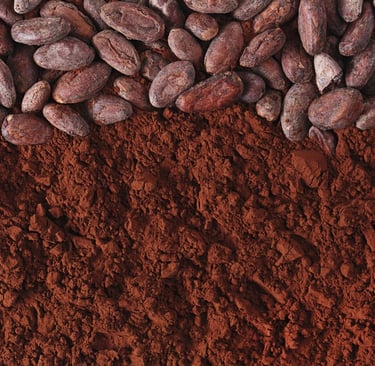
Cocoa powder is the finely ground, defatted portion of fermented and roasted cacao beans (Theobroma cacao). During the cocoa powder manufacturing process, cocoa butter is pressed out of cocoa liquor (a thick paste made from ground cocoa nibs), and the remaining solid material known as press cake is pulverized into the fine powder we recognize on supermarket shelves and in industrial formulations alike. This powder delivers an intense, concentrated chocolate flavor while remaining relatively low in fat compared to whole chocolate.

Not all cocoa powder is the same. Two main types dominate the market, and both are produced using the same core cocoa powder manufacturing process; the difference lies in one additional treatment step.

Natural cocoa powder has a pH of roughly 5.0–5.8. It carries a brighter, more acidic flavor profile and a lighter reddish-brown color, staying close to the raw character of the cocoa bean.

Dutched (alkalized) cocoa powder is treated with alkalizing agents such as potassium carbonate, raising its pH to around 6.8–8.2. This treatment produces a darker color, a smoother and milder taste, and improved dispersibility in liquids, which is why it's popular in beverages and products that need to dissolve easily.

Whether a manufacturer produces natural or Dutched cocoa, the alkalization step can be introduced either before or after pressing, depending on the specific plant design and desired end product.

Every batch of cocoa powder starts with properly fermented cocoa beans, typically fermented for five to seven days, then dried (either sun-dried or mechanically dried) to a moisture content of approximately 6–7%. Depending on whether alkalized cocoa is being produced, alkalizing agents such as potassium carbonate, sodium carbonate, or ammonium carbonate may be used, selected according to regional food safety standards. Processing aids like food-grade steam for sterilization and inert gas for flavor protection during packing are also common.

The final composition of the powder varies depending on the intended grade:

  • Fat content: approximately 10–12% for standard powder, 20–24% for high-fat powder, or 8–10% for low-fat powder

  • Moisture: 5% or less, often closer to 3–4%

Particle size: typically D90 of 60–150 microns, depending on the application

1. Cleaning & Sorting

Raw cocoa beans pass through sieves, destoners, magnets, and optical sorters to remove stones, metal fragments, sticks, and defective beans before processing begins.

2. Roasting

Roasting develops the beans' signature flavor, reduces moisture, loosens the outer shell for easier removal, and lowers microbial load. Depending on the roasting method, drum, continuous, or fluid-bed roasters beans are typically roasted between 110 and 150°C for 15 to 45 minutes, with the exact profile adjusted based on bean origin.

3. Winnowing

After roasting, the cracked beans are separated into cocoa nibs (the kernel) and shells through a process called winnowing. The removed shells aren't wasted; they're commonly repurposed as biomass fuel or animal feed.

4. Grinding to Cocoa Liquor

The nibs are ground using hammer mills, pin mills, or stone and ball mills to create a viscous paste known as cocoa liquor, which contains roughly 50–56% cocoa butter. Finer grinding under 30 microns for premium products results in a smoother liquor, which improves both pressing efficiency and final flavor quality.

5. Alkalization (Optional)

For manufacturers producing Dutched cocoa powder, alkalization can happen at different stages. In nib alkalization, nibs are sprayed or tumbled with alkali and then roasted to lock in color and flavor. In liquor alkalization, the alkali is mixed directly into the liquor under controlled temperature and pressure to adjust pH and color.

6. Hydraulic or Expeller Pressing

This is one of the most critical stages of the entire cocoa powder manufacturing process. Cocoa liquor is pressed under high pressure to separate cocoa butter from the remaining solids. The amount of butter extracted depends on the target fat percentage of the finished powder, and the resulting press cakes are discharged as discs or chips.

7. Cake Cooling & Stabilization

The press cake is rapidly cooled to prevent fat migration and conditioned into a stable, brittle texture that's ready for milling.

8. Cake Milling

The cooled press cake is milled using pin, hammer, or air classifier mills to achieve the desired particle size distribution. In some production systems, alkalization can also be applied after pressing (cake alkalization) before the final milling stage.

9. Sterilization & Pasteurization

To meet strict microbiological safety criteria, low-moisture cocoa powders may undergo steam treatment or other validated decontamination methods—carefully controlled so flavor isn't compromised.

10. Sieving & Air Classification

Oversized particles are removed, and air classifiers fine-tune the particle size distribution to ensure a consistent mouthfeel and reliable dispersibility in the final product.

11. Blending & Standardization

Batches are blended together to hit precise specifications for fat percentage, color, pH, and flavor profile, ensuring every shipment meets consistent quality standards.

12. Packaging

Finished cocoa powder is packed into multi-wall kraft bags with polyethylene liners (typically 10–25 kg) or bulk bags (500–1,000 kg). Headspace may be nitrogen-flushed to preserve freshness, and the powder is stored in cool (under 25°C), dry, odor-free conditions until it reaches food manufacturers, bakeries, beverage producers, and retail markets around the world.

Flow Diagram at a Glance

Beans → Cleaning → Roasting → Winnowing → Nibs/Liquor → Alkalization (optional) → Pressing → Press Cake → Cooling → Milling → Sterilization → Sieving/Classifying → Blending → Packaging → Cocoa Powder

Quality Control & Key Parameters

Consistent quality throughout the cocoa powder manufacturing process depends on tight control at every stage. Incoming beans are checked for moisture content (ideally 7% or below), visible defects, mold, and potential ochratoxin A (OTA) risk. Roast profiles are carefully tracked through time and temperature curves to ensure proper flavor development. Liquor fineness is generally targeted below 30–40 microns (D90) for efficient pressing and a smooth final texture.

Other critical parameters include pH (5.0–5.8 for natural cocoa, 6.8–8.2 for Dutched), fat content (commonly 10–12% or 20–24% depending on grade), and moisture in the finished powder (5% or less, ideally 3–4%). Manufacturers also monitor color using lab color metrics, conduct microbiological testing for aerobic plate counts and yeasts/molds, verify the absence of pathogens such as Salmonella, and test for heavy metals and pesticide residues against regulatory limits. Sensory evaluation, assessing aroma, bitterness, astringency, and aftertaste, remains an essential final check before a batch is approved.

Equipment Overview

A modern cocoa powder manufacturing facility relies on a range of specialized equipment: cleaning systems including screens, aspirators, magnets, destoners, and optical sorters; roasting equipment such as drum roasters, continuous belt roasters, or fluid-bed roasters; winnowers that combine breaking and air separation; and a variety of mills, pin and hammer mills for press cake, stone, ball, or roller mills for liquor, and air classifiers for precise particle size control. Hydraulic or screw presses with butter recovery systems handle the pressing stage, while jacketed mixing vessels with agitation and pressure control manage alkalization. Sterilization is typically achieved through saturated steam or validated dry decontamination systems, and packaging lines are equipped with form-fill-seal machinery, nitrogen flushing, metal detection, and checkweighers to ensure product safety and accuracy.

Food Safety, Certifications & Compliance

Reputable cocoa powder manufacturers implement a robust HACCP plan supported by Good Manufacturing Practices (GMP), Sanitation Standard Operating Procedures (SSOP), and full traceability systems. Common industry certifications include ISO 22000 or FSSC 22000, BRCGS or SQF, and Halal or Kosher certification, depending on target markets. While cocoa itself is typically considered a non-allergen ingredient, cross-contact risks must still be carefully managed. Proper labeling, including declared fat percentage, whether the product has been alkalized, and country of origin, is also a regulatory requirement in most markets.

Sustainability Considerations

Sustainability plays an increasingly important role in cocoa powder production. Cocoa shells, a by-product of winnowing, can be valorized as biomass fuel, compost, or a source of theobromine and dietary fiber. Energy efficiency is improved through heat recovery from roasters and variable-speed drives on mills and fans. Water use is generally minimal, mainly limited to sanitation, with any condensate or wash water properly treated. Responsible sourcing supporting certified or independently verified sustainable cocoa programs such as Rainforest Alliance or Fairtrade  also helps address deforestation and improve farmer livelihoods across cocoa-growing regions.

Common Defects & Troubleshooting

Even a well-designed cocoa powder manufacturing process can run into quality issues. Flat, underdeveloped flavor often points to under-fermented beans or insufficient roasting, which can be corrected by adjusting sourcing standards and roast curves. Astringent or harsh notes typically result from over-roasting or inadequate alkalization and can be resolved by optimizing alkalization pH and timing or blending with smoother-tasting origins. Poor dispersibility or clumping usually stems from high moisture content or an overly wide particle size distribution, which calls for improved drying, tighter classification, and low-humidity packaging environments. Fat bloom in finished blends can occur when residual butter content is too high combined with warm storage conditions. A lower-fat powder specification or cooler logistics chain usually solves this. Microbiological failures point to an inadequate kill-step or recontamination risk, requiring validation of the sterilization process and reinforced hygiene zoning and air filtration.

Frequently Asked Questions

What's the difference between natural and Dutched cocoa in the manufacturing process? Both follow the same core cocoa powder manufacturing process. Dutch cocoa simply adds an alkalization stage applied to the nibs, liquor, or cake to raise pH, deepen color, and mellow the flavor.

Which step defines the final fat percentage? Pressing is the key step. Adjusting press settings and liquor feed rate determines how much cocoa butter remains in the press cake, which in turn determines the fat content of the finished powder.

How fine should cocoa powder be? This depends on the application, but many bakery and beverage powders target a D90 particle size of roughly 60–150 microns. Finer powders disperse better in liquids but may be more prone to caking if moisture levels rise.

Does alkalization affect nutrition? Yes, to some degree. Alkalization can slightly reduce certain polyphenols and change antioxidant readings, while also affecting color, taste, and solubility. Manufacturers choose the target pH based on the specific needs of the final product.

How should cocoa powder be stored? Cocoa powder should be kept in cool, dry, odor-free conditions, ideally below 25°C with relative humidity under 65% and protected from light and strong odors. Keeping bags sealed and using nitrogen flushing where possible helps extend shelf life.

"Partner with Cocoa Prime to secure high-quality bulk ingredients today. Explore our comprehensive Premium Cocoa Products to view our bulk options for cocoa powder, cocoa butter, and cocoa mass."

Contact us: admin@cocoaprime.com, +62 881 0104 79948

Related Article: The Role of Cocoa Powder in the Food and Beverage Industry

Cocoa Prime

Committed to bring the finest
Indonesian Cocoa to the world

Copyright © 2026 Cocoa Prime

Contact us:

Jl. Letnan Sutopo, Serpong, Tangerang

PHONE: +62-881-0104-79948